

February 13, 2026
How to Charge a Car Battery
Charging a dead car battery seems simple, but it takes a little know-how to do the job safely. Whether you’re learning how to properly charge a car battery or wondering how long it takes to charge a car battery, this guide will walk you through every step — from preparation to disconnecting your charger safely.
We’ll also cover what charges a car battery, ways to charge a car battery, how long it takes to charge a car battery, and how to tell if your battery may need to be replaced instead of recharged and other helpful tips.
Getting Ready to Charge
Before diving in, it’s important to understand that even a “dead” battery can still deliver a dangerous shock. Proper safety and setup are essential.
If you’ve found that your battery is dead in the convenience of your garage, it’s time to break out the charger.
Be sure to familiarize yourself with the manufacturer’s instructions on how to use the battery charger and ways to charge your car battery. Some batteries are easily accessible; however, some are under or in the fender, and some may even be in the trunk or under the seat, depending on the make and model of your vehicle.
Before getting started, be sure you have all the tools for the job on hand. Ensure all electronics and lights are off and your car is securely parked.
Safety first:
- Work in a well-ventilated area to prevent gas buildup.
- Wear gloves and eye protection before touching battery terminals.
- Ensure all vehicle electronics are off and your car is in park.
- Check your battery cables and clamps for corrosion or damage before connecting.
Remember: even when learning how to charge a car battery at home, it’s always best to take precautions to avoid sparks, short circuits, or electrical shocks.
Hooking up the Battery Charger
Follow the instructions for your particular charger. Basic instructions for how to use a battery charger include:
- Remove the negative (-) cable from the battery terminal.
- Remove the positive (+) cable from the battery terminal.
- Check the condition of the terminals and clean them if needed. (You may use commercial cleaners or baking soda and water. Remember to wear gloves and eye protection!)
- Make sure the charger is off and unplugged.
- Hook up the positive cable on the charger to the positive terminal on the battery.
- Hook up the charger’s negative cable to the battery’s negative terminal.
- Plug in the charger.
- Follow your charger’s instructions to identify your battery type and set the proper amperage.
- Turn on the charger.
When the timer sounds, or the readings say your charge is complete, turn off and unplug your charger. Remove the positive cable first and then the negative.
Knowing when hooking up a battery charger which cable is first is essential — always connect positive before negative, and when disconnecting, remove the negative cable first for safety.
These steps apply whether you’re charging a dead car battery overnight or simply topping off a weak one.
How Long Should You Charge a Car Battery?
How long it takes to charge a car battery depends on your charger’s amperage and the battery’s voltage. Your car charger’s instructions will give you the best timetable for how long you should charge your car battery, but generally, the higher the amps going in, the faster your battery will charge. However, using a lower amperage is a slower, gentler approach that may prolong the life of your battery.
If the battery voltage is below 11.85 and your charger puts out a 5-amp charge rate, it will take about 12 hours to fully charge a battery with 400 to 500 cold-cranking amps. The same battery will take about 6 hours to fully charge if the charge rate is 10 amps. The lower the open-circuit voltage in the battery and the more cold-cranking amps, the longer it will take to charge the battery.
As a rule of thumb:
- Higher amperage = faster charge (but may shorten battery life).
- Lower amperage = slower, safer charge (ideal for long-term maintenance).
If your battery won’t hold a charge it could indicate a bad cell or internal failure. In this case, bring your battery or your vehicle with your battery to a local Meineke Car Care Center, and we will change your vehicle’s battery.
How to Disconnect Safely
When the charger indicates your battery is full, it’s time to disconnect — but order matters here, too.
Follow these steps to safely disconnect the charger:
- Turn off and unplug the charger.
- Remove the negative (-) cable first.
- Remove the positive (+) cable second.
- Double-check that all tools and cables are clear before closing the hood.
Proper disconnection helps prevent sparks or damage to your vehicle’s electrical system.
Jump-Starting vs. Charging
So what’s the difference between jump-starting vs. charging a car battery?
- Jump-starting provides a temporary boost of power from another vehicle or jump pack. It’s a quick fix when you need to start your car immediately.
- Charging, on the other hand, fully restores energy to your battery using a dedicated charger. It’s a more thorough, long-term solution that helps maintain battery health.
While your car alternator charges the battery while driving, it’s not designed to recharge a completely dead one. Relying solely on the alternator after a jump-start can overwork it and reduce both alternator and battery lifespan.
If you’re frequently charging a dead car battery, it may indicate a deeper issue — such as a failing alternator, parasitic drain, or corroded connections. Meineke technicians can help identify the cause and recommend the best fix.
How to Jump a Car Battery
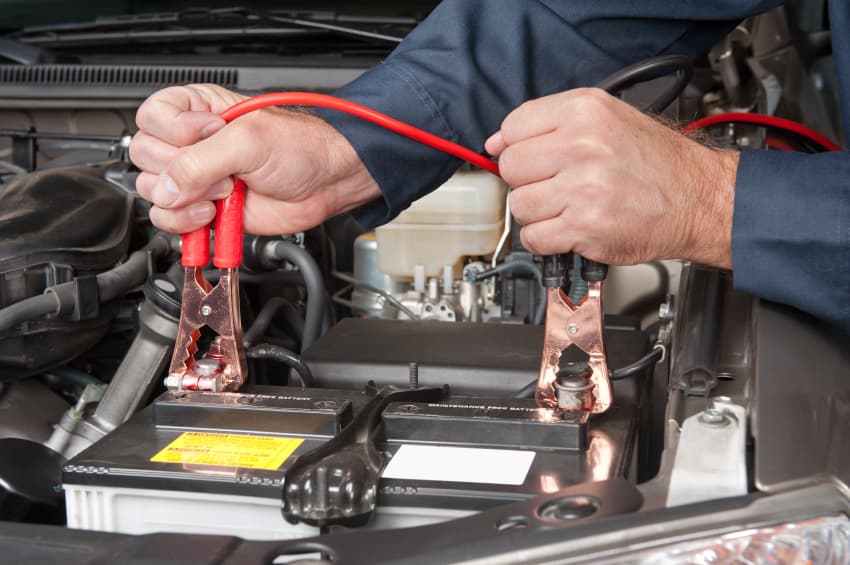
Jump-starting a car battery is a very similar process. Here are a few quick reminders on how to correctly jump a car battery. For more information, visit our step-by-step instructions with pictures on jump-starting a car battery.
If you need a quick start instead of a slow charge, here’s how to jump a car battery safely:
- Park both vehicles close together but not touching.
- Attach the red cable (+) to the dead battery’s positive terminal.
- Attach the other red cable end to the charged battery’s positive terminal.
- Attach the black cable (-) to the working battery’s negative terminal.
- Connect the remaining black cable to an unpainted metal part of the car with the dead battery.
- Start the working vehicle, then try to start the dead one.
- Once the car starts, remove cables in reverse order: black from the metal frame, black from the good battery, red from the good battery, then red from the dead battery.
Once the car is started, remove the cables in reverse order.
What If Battery Won’t Take or Hold a Charge
If your car battery won’t hold a charge, there may be more serious issues at play:
- Bad battery cell: Internal damage prevents proper energy storage.
- Sulfation: Lead sulfate buildup reduces battery capacity.
- Parasitic drain: An electrical component keeps drawing power after the car is off.
- Alternator failure: Your alternator isn’t recharging the battery while driving.
Repeatedly charging dead car batteries can shorten their lifespan permanently. The best way to find out what’s wrong is with a professional battery test at Meineke. Our technicians can determine whether the battery, alternator, or another component is the culprit.
Visit Meineke for Expert Battery Services
When your car won’t start or your battery keeps dying, Meineke has you covered. Our technicians provide:
- Battery testing and diagnostics
- Battery replacement
- Charging system inspection
- Alternator repair
Whether you need help understanding how to properly charge a car battery, need to replace a worn battery, or simply want to prevent future charging issues, Meineke’s experts are here to help, visit your nearest Meineke Car Care Center for expert battery services.
You can find more information about keeping your car’s battery in top shape on our blog.
Related Posts

2/21/2024
When to Replace a Car Battery
No one wants to be stuck in a grocery store parking lot with a car that won’t start, so why wait until that moment to replace your battery? How can you tell when it’s time to replace your car battery? Your car’s battery is like its heart because nothing else can function without it. […]

2/2/2017
How Long Do Hybrid Car Batteries Last?
You might choose to drive a hybrid car over a conventional gas-powered one for many reasons. It will help you save money on fuel and reduce your environmental footprint. But there is a lot of new information to learn and consider. One item on that list is understanding what a hybrid battery lifespan […]
2/23/2017
5 Tips for Getting the Most from Your Vehicle’s Battery
You never want to be stuck by the side of the road with a stranded vehicle. But every year, dead vehicle batteries leave millions of Americans doing just that, stuck in their driveways or looking for help from passing motorists. In honor of National Battery Day on February 18, the total car care experts at […]