|
Car Maintenance and Car Care Tips
The following information is reproduced courtesy of the Motorist
Assurance Program.
Welcome to the World of Car Care
Whether or not you pump your own gas, your car probably receives
less attention than it should. Regular car maintenance checks and
simple service can greatly reduce the cost of car ownership. Find
car care and car maintenance tips below.
- For maximum fuel efficiency and cleaner air, keep your engine
in tune.
- For safe driving, keep brakes, steering and suspension systems
in A-1 condition.
Most of the car maintenance tips, checks and services described
here can be done at little or no cost. Best of all, they are quick
and easy to do and they can save time, money and inconvenience
now and later. Always refer to your owner's manual when performing
any maintenance task on your vehicle.
Periodically your car should have a thorough inspection by a qualified
technician.
Car Care Tips Under the Hood
- Check the antifreeze/coolant level weekly.
Some cars have transparent reservoirs with level markings. Fill
to level marking with 50/50 solution of antifreeze and water. Caution: Do
not remove the pressure cap when engine is hot.
- Inspect belts and hoses monthly. Replace worn,
glazed or frayed belts. Tighten them when more than 1/2" of
slack can be depressed between the pulleys. Vehicles with spring
loaded belt tensioners require no adjustment. Replace bulging,
rotten, or brittle hoses and tighten clamps. If a hose looks
bad, or feels too soft or too hard, it should be replaced.
- Check transmission fluid monthly with engine
warm and running, and parking brake on. Shift to drive, then
to park. Remove dipstick, wipe dry, insert it and remove it again.
Add the approved type fluid, if needed. Do not overfill!
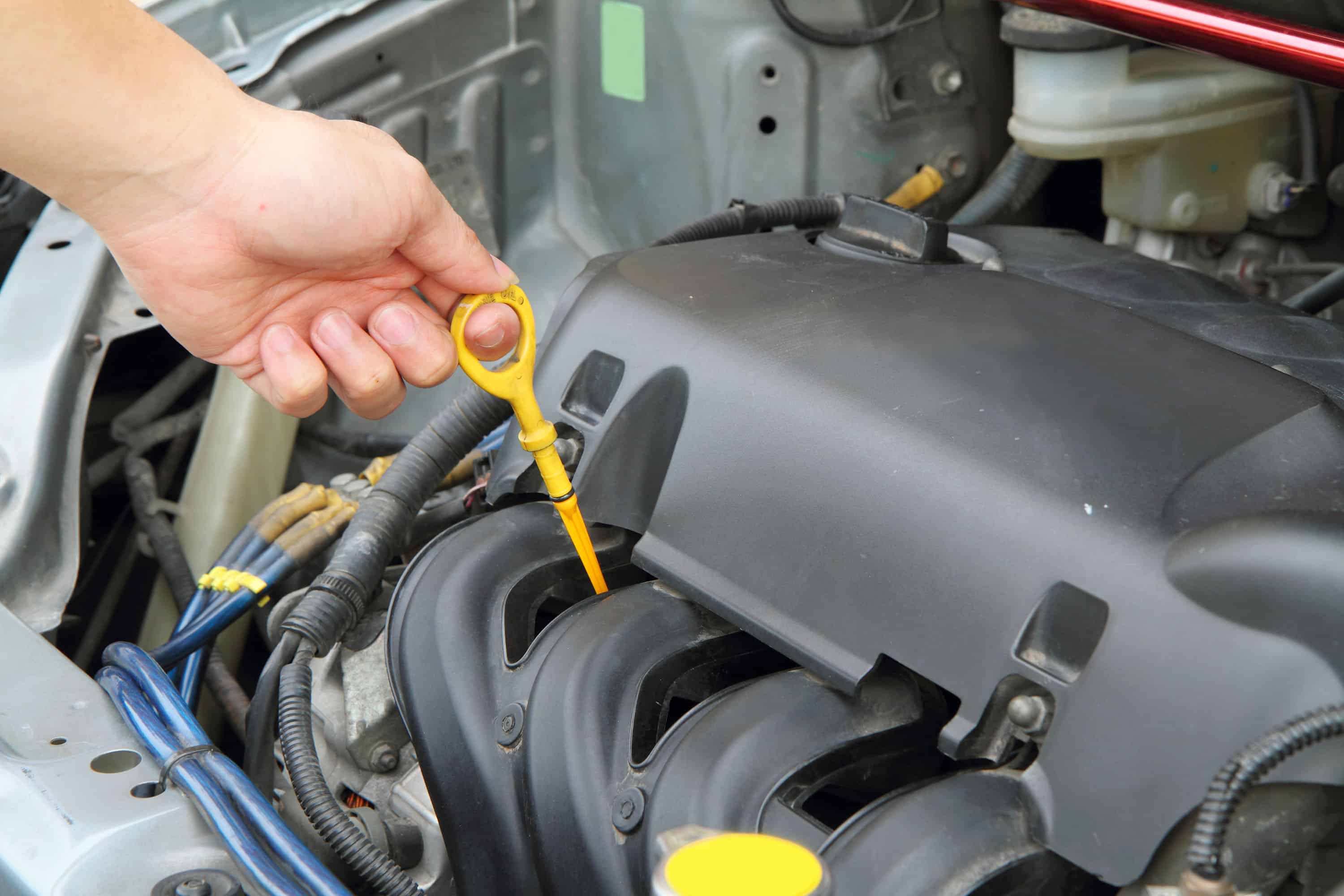
- Check oil every other fill up. Remove the dipstick, wipe
it clean. Insert it fully and remove it again. If it is low, add oil. To maintain
peak performance, change oil every 3,000 miles or 3 months, whichever comes
first. Replace oil filter with every oil change.
- Check the air filter every other month. Replace it when
it's dirty or as part of a tune-up. It is easy to reach, right under the big
metal "lid" in a carbureted engine; or in a rectangular box at the
forward end of the air duct hose assembly.
- Check brake fluid monthly. First, wipe dirt from the brake
master cylinder reservoir lid. Pry off the retainer clip and remove the lid
or unscrew plastic lid, depending on which type your vehicle has. If you need
fluid, add the approved type and check for possible leaks throughout the system.
Fill to mark on reservoir. Caution: Do not overfill.
- Keep windshield washer fluid reservoir full. When topping
off, use some windshield washer fluid on a rag to clean off the wiper blades.
In winter months, pay attention to the freezing point of the washer fluid.
- Use extreme caution when handling a battery since it can
produce explosive gases. Do not smoke, create a spark or light a match near
a battery and always wear protective glasses and gloves. Have it checked with
every oil change. Cables should be attached securely and be free of corrosion.
If battery has filler holes, add only clear, odorless drinking water.
- Check power steering fluid level once per month. Simply
remove the reservoir dipstick. If the level is down, add fluid and inspect
the pump and hoses for leaks.
Car Care Tips Around the Car
- Inspect windshield wiper blades whenever
you clean your windshield. Do not wait until rubber is worn or
brittle to replace them. Wiper blades should be replaced at least
once per year, and more often if smearing or chattering occurs.
- Be sure all your lights are clean and working,
including brake lights, turn signals and emergency flashers.
Keep spare bulbs and fuses in your vehicle.
- Keep tires inflated to recommended pressure
(it helps to own your own gauge). Check for cuts, bulges and
excessive tread wire. Uneven wear indicates tires are misaligned
or out of balance. Keep a record of tire rotation. Rotate at
the first 5,000 miles and every 7,500 miles thereafter.
- Look for signs of oil seepage on shock absorbers.
Test shock action by bouncing the car up and down. The car should
stop bouncing when you step back. Worn or leaking shocks should
be replaced. Always replace shock absorbers in pairs.
- Look underneath for loose or broken exhaust
clamps and supports. Check for holes in muffler or pipes. Replace
rusted or damaged parts. Have emission checked at least once
per year for compliance with local laws.
Preventive Car Maintenance Check List |
Vehicle System
or Part |
Diagram
Ref. No. |
Check
Weekly |
Check
Monthly |
Check Every
2 Months |
Special
Note |
|
| Air Filter |
5 |
|
|
 |
|
Inspect and replace when dirty. |
| Antifreeze |
1 |
 |
|
|
|
Add 50/50% solution when needed. |
| Battery |
8 |
|
|
|
 |
Check with every oil change. |
| Belts |
2 |
|
 |
|
|
Inspect for slack between pulleys. |
| Brake Fluid |
6 |
|
 |
|
|
Add approved type when needed. |
| Engine Oil |
4 |
|
|
|
 |
Check level every other fuel fill up -- change every 3 months
or 3,000 miles. |
| Exhaust |
14 |
|
|
|
 |
Have emissions checked yearly. |
| Hoses |
2 |
|
 |
|
|
Inspect for softness or bulges. |
| Lights |
11 |
|
|
|
 |
Keep spare bulbs and fuses in vehicle. |
| Oil Filter |
4 |
|
|
|
 |
Replace with every oil change. |
| Power Steering Fluid |
9 |
|
 |
|
|
Add approved type when needed. |
| Shock Absorbers |
13 |
|
|
|
 |
Replace when worn or leaking. |
| Tires |
12 |
|
 |
|
|
Inflate to recommended pressure level. |
| Transmission Fluid |
3 |
|
 |
|
|
Check with engine running; add approved type when needed. |
| Washer Fluid |
7 |
|
|
|
 |
Check every other fill up. |
| Wiper Blades |
10 |
|
|
|
 |
Replace yearly or when smearing or chattering. |
This information produced by MAP in collaboration with Car Care
Council, 42 Park Drive, Port Clinton, OH 43452.
Return to Repair and Maintenance
|