
November 13, 2026
How to Check Brake Fluid
Skill level: Beginner
Estimated effort: 10 to 20 minutes
Checking your brake fluid is one of the quickest inspections you can do on your own, and it can catch a problem long before it affects your ability to stop. All you need is a few minutes, a clean rag, and a flashlight. In most vehicles, you will not even need to open the reservoir.
This guide walks through where to look, what the fluid should look like, what a low level can mean, and when to leave the next step to a technician.
What Brake Fluid Does
Your brakes work on hydraulic pressure. When you press the pedal, the master cylinder pushes brake fluid through a network of lines and hoses to each wheel, where it forces the brake pads against the rotors or the shoes against the drums. Because liquids do not compress, the force from your foot is transferred almost instantly to all four wheels.
Brake fluid also has to handle extreme heat. Hard braking can push the temperature at the calipers well past the boiling point of water, so brake fluid is formulated to resist boiling and to protect the metal and rubber parts inside the system from corrosion.
Over time, the fluid breaks down. Most brake fluids absorb moisture from the air, which lowers their boiling point and promotes corrosion. That is why checking both the level and the condition of the fluid matters.
Where Is the Brake-Fluid Reservoir?
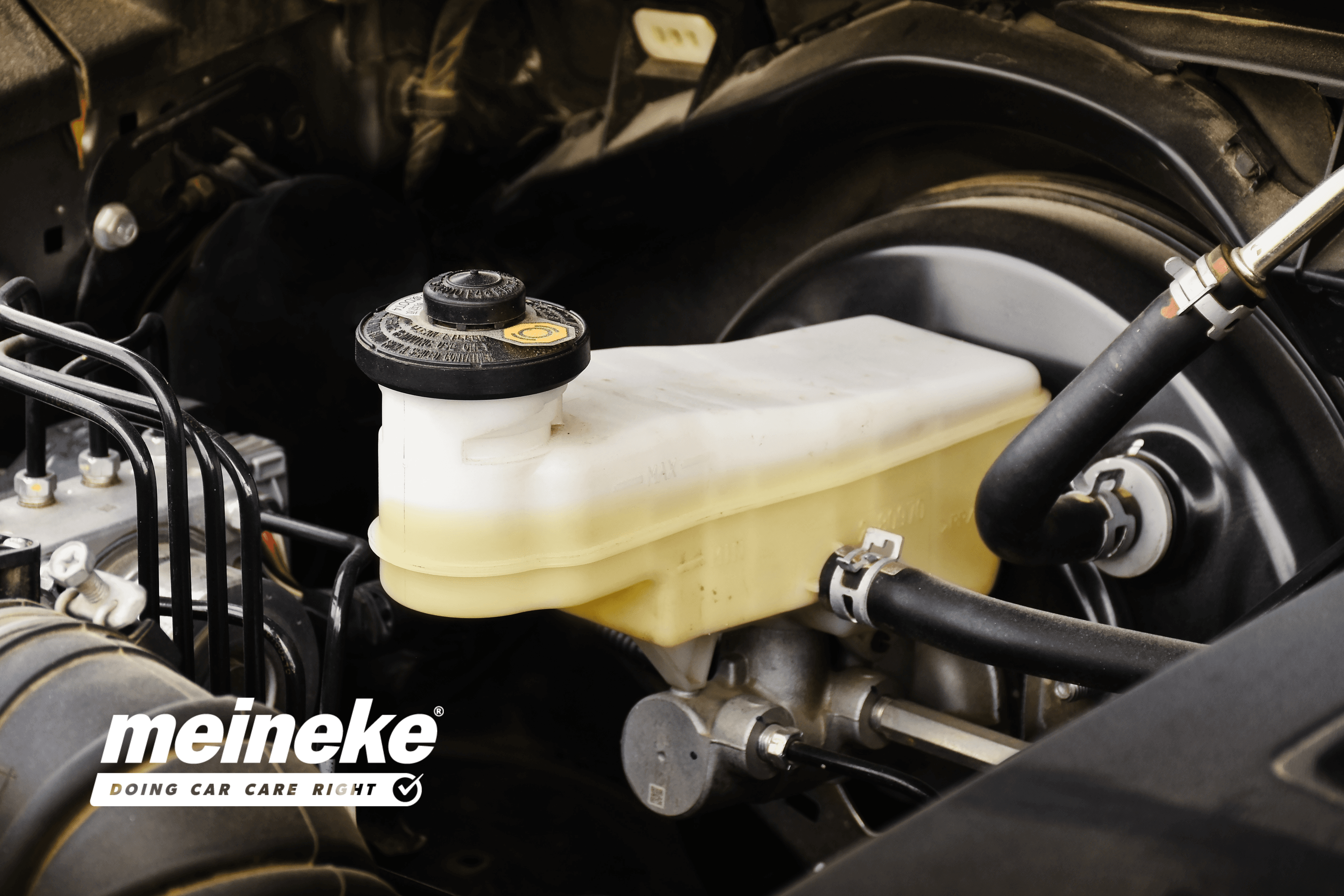
The brake-fluid reservoir is a small plastic tank mounted on top of the master cylinder. In most vehicles, you will find it in the engine bay on the driver's side, near the firewall, directly in front of where the brake pedal sits inside the cabin. On some vehicles it is partly hidden under a plastic cover or tucked beside other components.
The reservoir is usually made of translucent white or yellowish plastic so you can see the fluid level through the side. The cap is often black or yellow and marked with a brake symbol, the words "brake fluid," or a warning about using only the specified fluid type. Some vehicles have a separate reservoir for the clutch that looks similar, so read the cap before you go any further.
If you cannot find it, your owner's manual will have a diagram of the engine bay with the reservoir labeled.
Check the Correct Fluid Specification
Before you do anything with brake fluid, find out which type your vehicle requires. The specification is printed on the reservoir cap and listed in your owner's manual. The most common types are:
| Type | Base | Typical Use |
|---|---|---|
| DOT 3 | Glycol | Older and many economy vehicles |
| DOT 4 | Glycol | Most modern cars and light trucks; higher boiling point than DOT 3 |
| DOT 5.1 | Glycol | Performance and heavy-duty applications; highest boiling point of the glycol types |
| DOT 5 | Silicone | Specialty use; not compatible with the others |
DOT 3, DOT 4, and DOT 5.1 are glycol-based and can generally be mixed in an emergency, though using the type the manufacturer specifies is always best. DOT 5 is silicone-based and must never be mixed with glycol fluids or added to a system designed for them.
Write down the type before you buy fluid and check the label on the bottle twice before opening it.
How to Check Brake-Fluid Level
- Park on level ground and let the engine cool. A sloped surface can give a false reading, and a hot engine bay is harder to work around.
- Locate the reservoir and wipe the outside with a clean rag so you can see through it clearly.
- Find the MIN and MAX lines molded into the side of the reservoir. Some vehicles use FULL and ADD, or a single line marked with a range.
- Read the level against the lines. Use a flashlight if the plastic has yellowed or the fluid is dark. The level should sit between the two lines, ideally close to MAX.
- Leave the cap on unless you need to add fluid. Opening the reservoir lets in moisture and dirt. Many vehicles let you see the level without removing the cap.
- If you must open the cap, clean the cap and surrounding area first so nothing falls in. Then replace the cap promptly and tighten it securely.
If the level is below MIN, treat it as a warning sign rather than a maintenance item. The section below on what low brake fluid can mean explains why.
How to Evaluate Brake-Fluid Condition
The level tells you one thing. The color and clarity of the fluid tell you another.
- Clear to light amber: Fresh fluid. This is what new brake fluid looks like out of the bottle.
- Light brown: Fluid that has aged and absorbed some moisture. It is likely still safe, but a flush may be due soon, especially if it has been two or more years since the last one.
- Dark brown or black: Fluid that is contaminated with moisture, debris, and worn rubber from seals. It should be flushed and replaced.
- Cloudy, milky, or with visible particles: Signs of significant contamination or water intrusion. Have the system inspected.
A repair shop can also test the fluid's moisture content or boiling point with a handheld tester or test strips. Many manufacturers recommend replacing brake fluid every two to three years or at a specific mileage, regardless of how it looks, because moisture absorption is not always visible.
What Low Brake Fluid Can Mean
Brake fluid does not get used up the way engine oil or windshield washer fluid does. A drop in the level always has a cause.
Normal Pad Wear
As brake pads wear thinner, the caliper pistons extend farther to keep the pads in contact with the rotors. That extra travel is filled by fluid from the reservoir, so the level in the tank slowly drops as the pads wear. This is normal and gradual. When new pads are installed and the pistons are pushed back, the fluid returns to the reservoir.
A level that has crept toward MIN over months of driving often means the pads are getting low and due for inspection.
A Hydraulic Leak
A sudden drop, or a level that keeps falling after you top it off, points to a leak. Fluid can escape from a brake line, a flexible hose, a caliper or wheel cylinder seal, or the master cylinder itself. A leak reduces pressure in the system and can lead to a soft, spongy, or sinking pedal.
Look for wet spots or drips near the wheels, along the brake lines under the vehicle, or around the master cylinder. Brake fluid is slippery and has a slightly oily feel. A vehicle with a suspected leak should not be driven until it is inspected.
Recent Service or Improper Filling
If your brakes were serviced recently, the reservoir may not have been filled all the way, or a small amount of air may have worked its way out during the first few miles. A slightly low level with no other symptoms shortly after brake work is worth mentioning to the shop that did the work so they can check it.
Should You Add Brake Fluid?
Sometimes, but it is not the automatic answer it might seem to be.
If the level is only slightly below MIN, the pads are known to be worn, and there are no signs of a leak, adding a small amount of the correct fluid to bring the level between the lines is reasonable. Keep these points in mind:
- Use only the type listed on the cap and in the manual.
- Use fluid from a new, sealed bottle. Brake fluid absorbs moisture from the moment the seal is broken, so an open bottle from last year should not be used.
- Do not fill past the MAX line. Fluid expands as it heats, and overfilling can cause it to leak out around the cap or interfere with the system when the pads are eventually replaced.
- Avoid spilling it. Brake fluid damages paint and plastics, so wipe up drips right away.
If the reservoir is well below MIN, if the level keeps dropping, or if the brake pedal feels different in any way, do not just top it off. Adding fluid masks the symptom without addressing the cause.
What Not to Mix With Brake Fluid
The brake system is sealed and sensitive to contamination. A small amount of the wrong fluid can swell seals, cause internal leaks, and lead to a total loss of braking.
Never add any of the following to the brake-fluid reservoir:
- Engine oil, transmission fluid, or power steering fluid
- Coolant or antifreeze
- Water or windshield washer fluid
- DOT 5 silicone fluid in a system designed for DOT 3, DOT 4, or DOT 5.1, or vice versa
- Brake fluid from an open, unsealed container
If any of these has been added to the reservoir, even accidentally, do not drive the vehicle. The system will likely need to be flushed and may need seals or components replaced. Call a repair shop for guidance.
When to Have the Brake System Inspected
Checking the fluid yourself is a good habit, but some findings call for a professional look:
- The fluid level is below MIN, or it has dropped noticeably since your last check
- The level keeps falling after you add fluid
- The fluid is dark, cloudy, or has particles in it
- You see wet spots or drips near the wheels or under the vehicle
- The brake pedal feels soft, spongy, or sinks toward the floor
- The brake warning light or ABS light is on
- It has been more than two to three years since the fluid was last replaced
- You hear grinding or squealing when braking, which can mean the pads are worn down
If you notice any of these, stop by your local Meineke. Our technicians can inspect the brake system, test the fluid, locate the source of any leak, and perform a brake-fluid flush or other repairs as needed. Find a Meineke near you to schedule a brake inspection.
Frequently Asked Questions
How often should I check my brake fluid?
Once a month is a good habit, and it only takes a minute or two. At a minimum, check it every time you check your oil or before a long trip.
Can I drive with low brake fluid?
If the level is slightly low and the pedal feels normal, you can drive to a shop to have it checked. If the level is far below MIN, the pedal feels soft or sinks, or the brake warning light is on, do not drive the vehicle. Have it towed.
Why is my brake fluid low but there is no leak?
The most common reason is normal brake pad wear. As the pads thin out, the caliper pistons extend and draw fluid from the reservoir. Have the pads inspected, and avoid overfilling the reservoir, since the fluid will return when new pads are installed.
What color should brake fluid be?
Fresh brake fluid is clear to light amber. Light brown fluid is aging. Dark brown or black fluid is contaminated and should be replaced.
Can I just add brake fluid without flushing?
You can top off the reservoir with the correct fluid if the level is slightly low and there is no leak. Topping off does not replace old, moisture-laden fluid, though. If the fluid is dark or it has been more than two to three years since the last service, a full flush is the proper fix.
Does the brake warning light mean low brake fluid?
It can. On many vehicles, the red brake warning light comes on when the fluid level drops below a sensor in the reservoir. The same light also comes on when the parking brake is engaged, so check that first. If the parking brake is off and the light stays on, have the brakes inspected right away.
Is it safe to open the brake-fluid reservoir?
Yes, as long as you clean the cap and the area around it first and close it again promptly. Keep the cap off for as short a time as possible, since brake fluid absorbs moisture from the air.
Related Posts
3/8/2017
How Do Brakes Work?
Imagine: You’re driving in your car on your way home from work. The windows are down and the music is up. Suddenly, a cat darts out in front of your car. You slam your foot on the brake to avoid hitting it, and your car dutifully comes to a halt. Braking in a time of […]
8/8/2025
How to Tell if Your Brake Fluid is Low
When it comes to vehicle safety, your braking system is one of the most critical components, and brake fluid plays a key role in how well it functions. Brake fluid helps transfer force from the pedal to the brakes themselves, enabling your car to stop quickly and effectively. If the fluid level drops too low, the entire system becomes compromised.
4/1/2025
Why Are My Brakes Squeaking
Few sounds are as unsettling as squeaky brakes. Whether you're pulling out of the driveway or coming to a stop at a red light, that high-pitched squeal can be annoying—and sometimes even alarming. While some brake noises are harmless, others signal potential issues that require attention.