Now hiring! Find auto repair jobs near me.
Oil Change Services
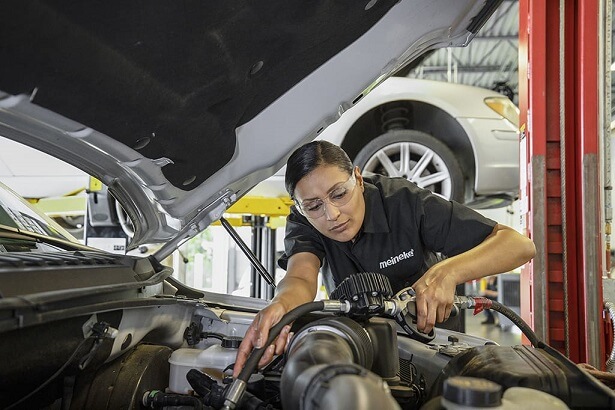
Looking for an oil change near you? How about a new oil filter? We want to make sure your vehicle receives the right kind of oil change at the right price. Whether synthetic oil or standard, our technicians will recommend the best type of oil for your car's individual needs to keep the engine working at its best, consistent with your manufacturer’s recommendations and your schedule. Also, when you sign up for Meineke Rewards, we are happy to offer you Free Towing!
Oil Change Packages & Current Oil Change Coupons
Performing your own oil change is a hassle! Our oil change offers and tire packages make it affordable to have this job done by a professional.Visit our locations page or call your local center today to learn about current coupons and deals and see how convenient and affordable your next oil change can be!
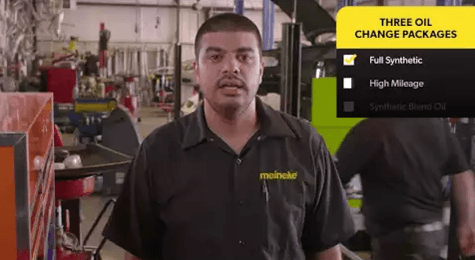
Our Local Oil Change Services
Your engine is made up of many moving parts, and those parts need to be properly lubricated to avoid damage to your vehicle's engine. Lubricating oil in the engine provides this vital service, but over time that oil breaks down and becomes contaminated with dust, dirt and debris from your engine as well as the environment. When that happens, oil can't do its job. Changing your oil and filter will help your vehicle's engine continue working at its best.
Our certified technicians will consider the make, model, condition and mileage of your car before recommending the necessary oil change.We offer synthetic blend, high mileage or full synthetic oil change packages that are recommended based on your car's individual needs. All oil change packages include a tire pressure check, fluid top off, tire rotation, visual brake check, standard oil filter and our 23-point inspection.
Due For An Oil Change?
Schedule an appointment today
Find Meineke Near You
Our oil change packages
FULL SYNTHETICOil Change Package
Recommended for most vehicles up to 10 years old or if manufacturer suggested.

Plus: GET450 BONUSREWARD POINTS
Prices may vary by location. Terms and Conditions Apply. See below for more information.
HIGH MILEAGEOil Change Package
Recommended for most vehicles with more than 75,000 miles or over 10 years old.
Plus: GET400 BONUSREWARD POINTS
Prices may vary by location. Terms and Conditions Apply. See below for more information.
SYNTHETIC BLENDOil Change Package
Recommended for most vehicles with fewer than 75,000 miles or under 10 years old.
Plus: GET350 BONUSREWARD POINTS
Prices may vary by location. Terms and Conditions Apply. See below for more information.
ALL PACKAGES INCLUDE:
 Tire Pressure Check
 Visual Brake Check
 Fluid Top Off
 eInspection or 23-point Inspection
 Tire Rotation
FREQUENTLY PURCHASED WITH OIL CHANGE:
Fuel System Cleaner
Tire Balancing
Standard Wiper Blades
A/C System Service
Up to 5 quarts of oil and standard oil filter included. Dexos and other OEM oil specifications available at an additional cost. Not valid on Basic or Conventional Oil Changes. Synthetic Blend applies to 5W20 and 5W30 viscosities. Valid on most cars and light trucks at participating Meineke U.S. locations. Not valid with any other offers, special order parts or warranty work. Taxes and additional disposal and shop supply fees may apply, where permitted. See center manager for complete details.
More about Oil on the Meineke Blog

Oct 20, 2015
WHY IS MY CAR LEAKING OIL?
May 12, 2015
HOW OFTEN SHOULD I CHANGE MY OIL?
Mar 6, 2015
TOP FIVE REASONS OIL CHANGES SAVE VEHICLES







schedule appointment